

Biodiversity Conservation
Hanmi Pharmaceutical recognizes the restoration of natural ecosystems and the conservation of biodiversity as critical sustainability aspects for our company. We will proactively prevent factors that threaten biodiversity during our business operations, and in the event of damage, we will restore and regenerate to offset biodiversity loss. Hanmi Pharmaceutical includes natural ecosystem protection and biodiversity conservation in its environmental management policy and continues related activities. Furthermore, we strive to apply these efforts not only to all our business sites but also throughout the entire supply chain connected by stakeholder interests.
Biodiversity Performance and Goals
Key | 2025 Target | 2026 Target | |
|---|---|---|---|
Targets | Achievement | ||
AMR | ㆍCompliance with AMR Framework (API PEC/PNEC<1) | 100% | ㆍCompliance with AMR Framework (API PEC/PNEC<1) |
[Hanmi Fine Chemical] Implementation of Antibiotic Substance Detection Validation | 100% | [Hanmi Fine Chemical] Implementation of Antibiotic Substance Detection Validation | |
Environmental Protection | ㆍPlanting over 1,000 Hanmi Green Forest trees (912 trees planted by 2025) | 91% | ㆍPlanting over 1,000 Hanmi Green Forest trees |
[Company-wide] Hanmi Green Forest and Gangwon nectar tree | 100% | [Company-wide] Hanmi Green Forest and Gangwon nectar tree planting / Invasive alien plant removal activities | |
Compliance with AMR (Antimicrobial Resistance)
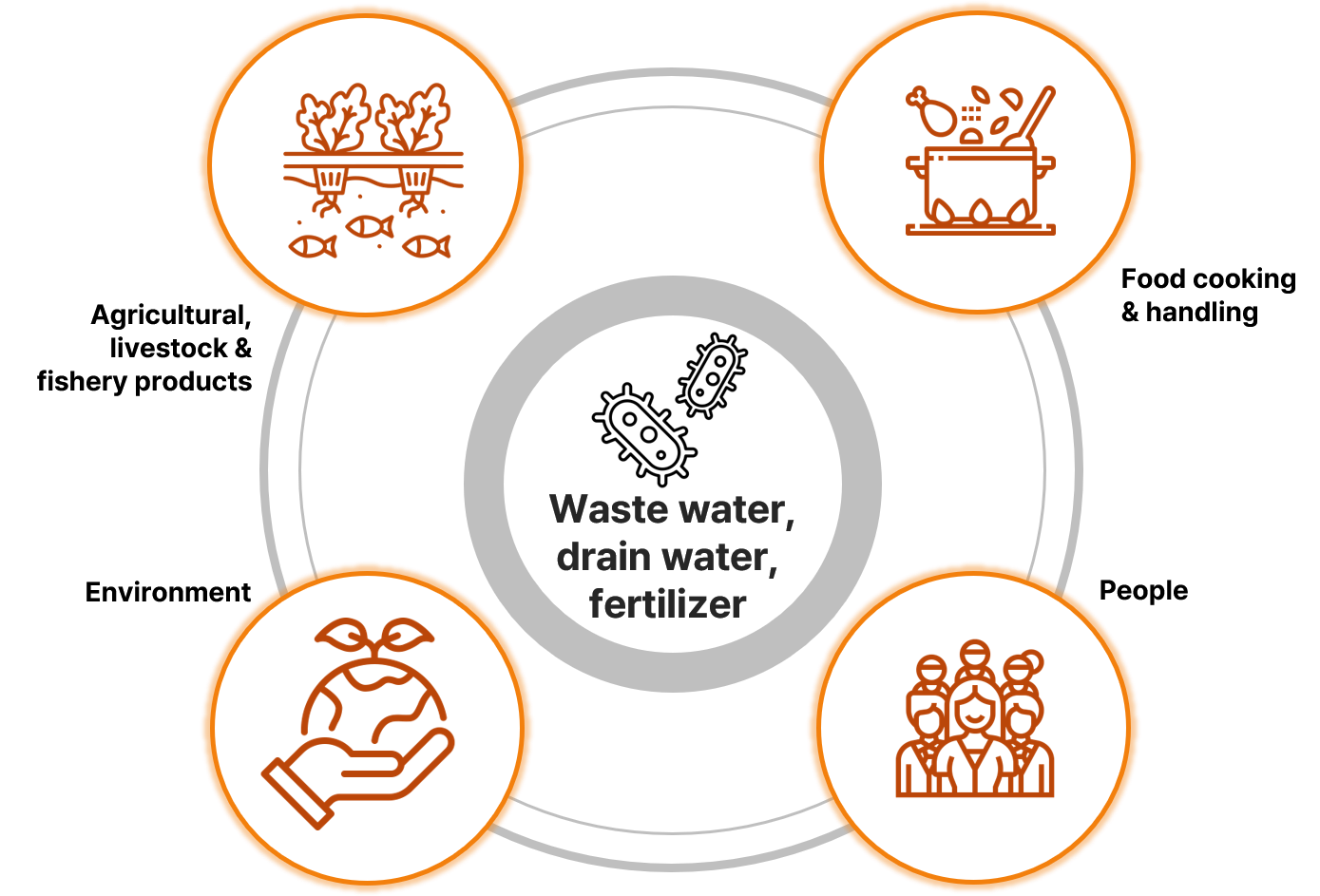
Hanmi Pharmaceutical strives to prevent the inflow of antibiotic-resistant (AMR, Antimicrobial resistance) wastewater into marine ecosystems. We conduct antibiotic substance detection and ecological risk assessment1) on wastewater generated from antibiotic manufacturing sites. Through this, we identify the probability of harmful effects on individuals and populations and work to minimize such impacts. Paltan Smart Plant and Hanmi Fine Chemical continuously monitor PEC2)/PNEC3) values and manage them below 1, indicating no harmful risk to ecosystems. Furthermore, for new projects, the company conducts environmental impact assessments in accordance with relevant laws and regulations, and strives to proceed in consultation with local residents and communities based on these regulations.
1) Ecological Risk Assessment: PEC/PNEC for humans
2) PEC (Predicted Environmental Concentration): Predicted environmental concentration (concentration of chemical substances derived in the environment, estimated by a predictive model)
3) PNEC (Predicted No-Effect Concentration): Predicted no-effect concentration (environmental concentration measured to not cause harmful effects on organisms living in ecosystems other than humans)
Compliance with the Nagoya Protocol
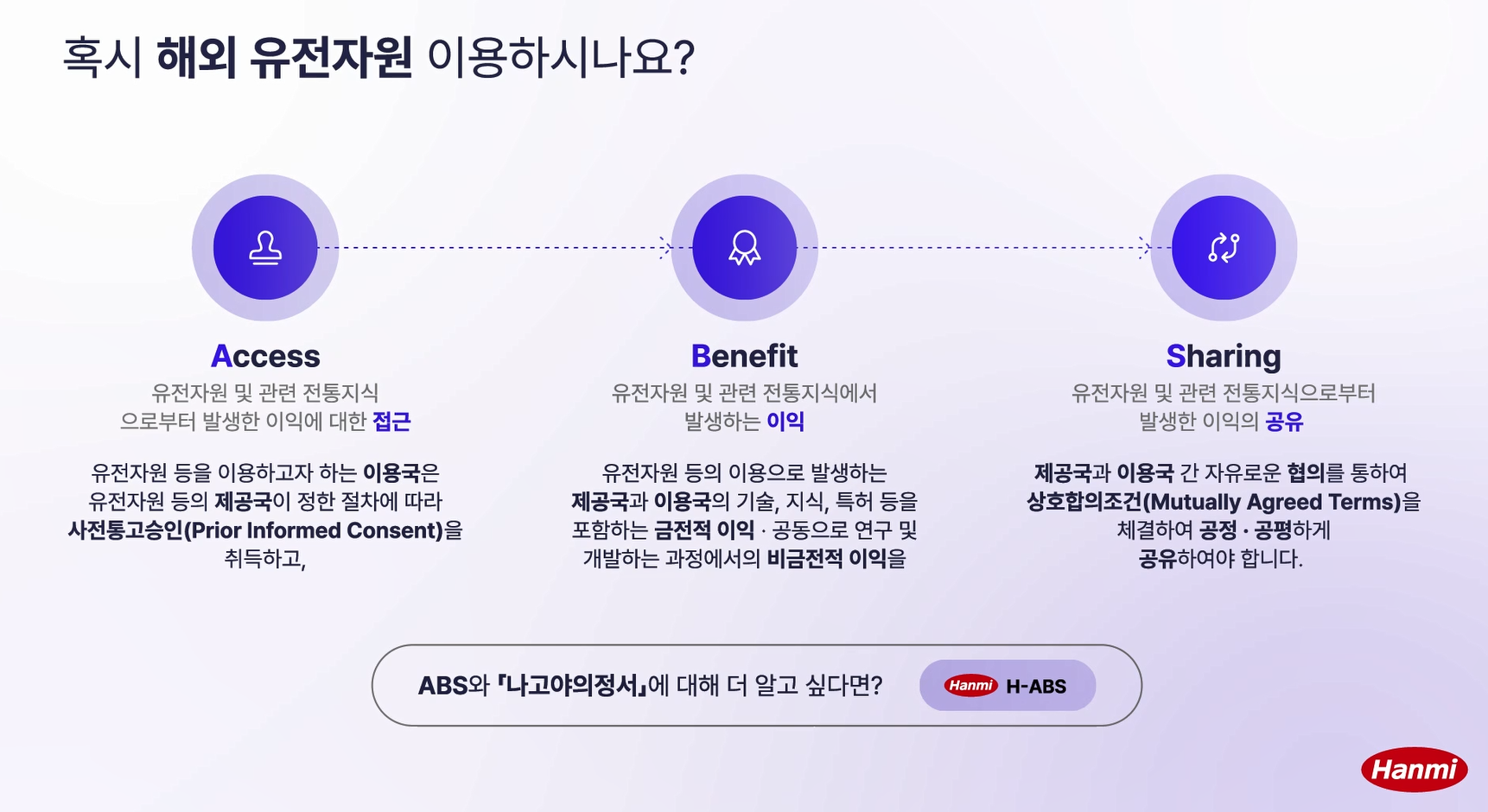
Hanmi Group's Responsible Choice for a Sustainable Future
Hanmi Group gravely recognizes the global supply chain crisis caused by the escalating climate crisis and environmental destruction, and is pursuing various response strategies to simultaneously achieve a healthy planet and a stable supply chain. As a mid-sized domestic pharmaceutical and bio-company that has expanded its business domain by manufacturing and distributing various product groups such as pharmaceuticals, food, cosmetics, and health functional foods, the Group has continuously strategized to secure sustainable growth engines beyond short-term growth. In this process, the company recognized the importance of biodiversity conservation and empathized with the purpose of the 「Nagoya Protocol on Access to Genetic Resources and the Fair and Equitable Sharing of Benefits Arising from their Utilization to the Convention on Biological Diversity」(“Nagoya Protocol”), which came into effect on October 12, 2014, establishing an internal compliance system to adhere to related norms. While continuously monitoring international norms and policy changes related to genetic resources, the company constantly conducts awareness-raising activities and internal training to ensure active compliance by employees, thereby steadily taking steps to implement ESG management in line with global standards.
Establishment and Operation of the Nagoya Protocol Integrated Information System (H-ABS)
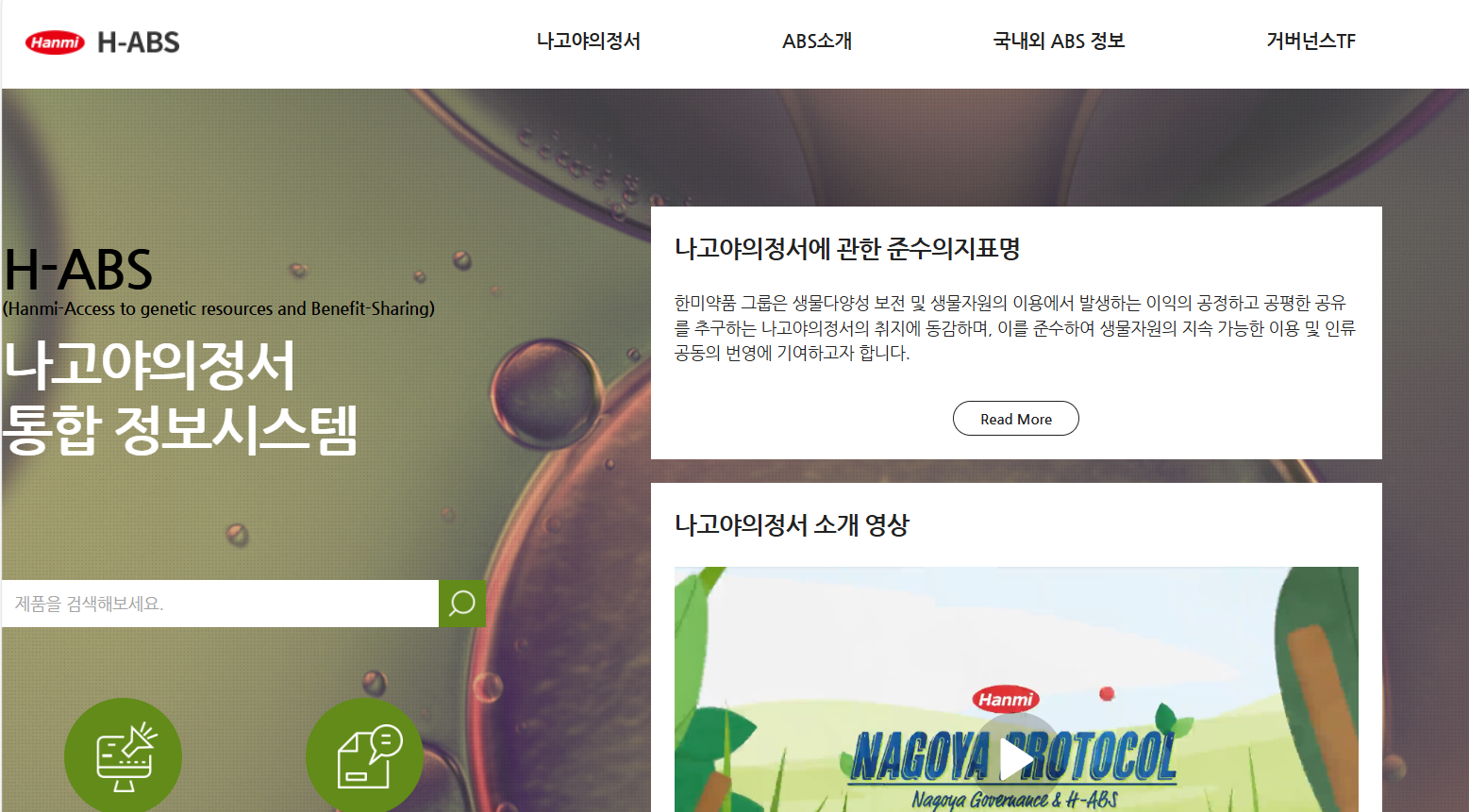
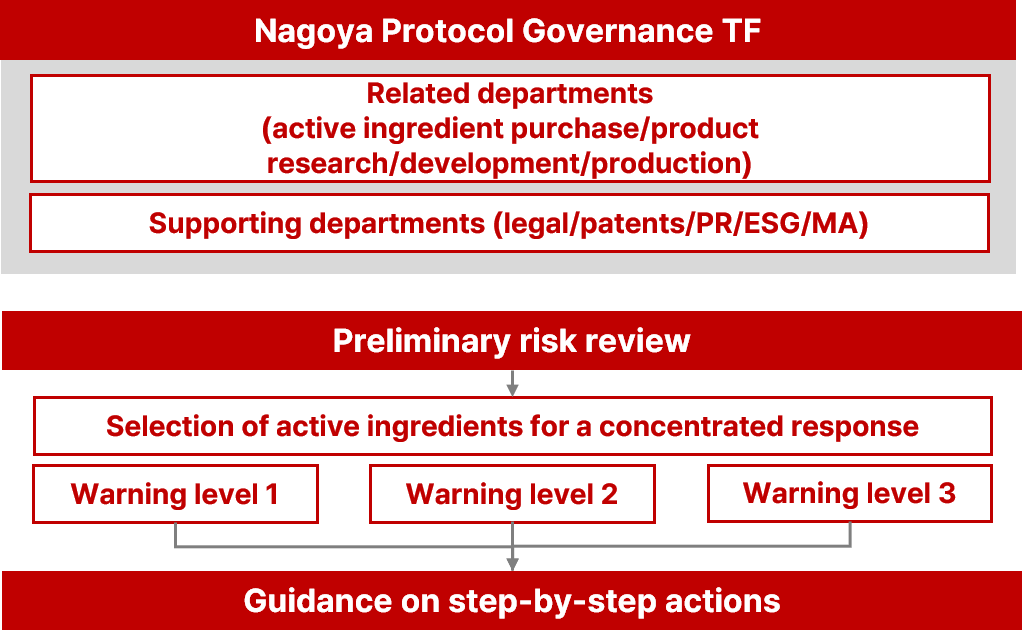
Hanmi Group officially commenced the establishment of an in-house compliance system for Nagoya Protocol adherence in 2018, thereby establishing processes to be strictly followed during R&D using genetic resources and forming a governance TF to comprehensively manage related risks, laying the foundation for system operation. Following this preparatory phase, in 2020, we launched the Hanmi-Nagoya Protocol Integrated Information System (Hanmi-Access to genetic resources and Benefit Sharing, H-ABS), an online-based Nagoya Protocol compliance system. H-ABS aims to support employees by providing the latest information on the Nagoya Protocol and relevant national laws and regulations, and allows easy identification of products currently manufactured and distributed by the company that are subject to the Nagoya Protocol through its “Product Search” menu. Furthermore, it operates an “Integrated Review Request” service that pre-checks whether raw materials intended for use in R&D are subject to the Nagoya Protocol, if any related risks exist, and provides guidance on necessary countermeasures, thereby assisting Hanmi Group employees in accurately and responsibly fulfilling their ABS (Access & Benefit Sharing) obligations. Additionally, the company has established internal application standards for Nagoya Protocol compliance, clearly guiding employees on situational response procedures and compliance matters, and is preparing to enact internal regulations for more systematic compliance system operation.
Activities Related to the Nagoya Protocol
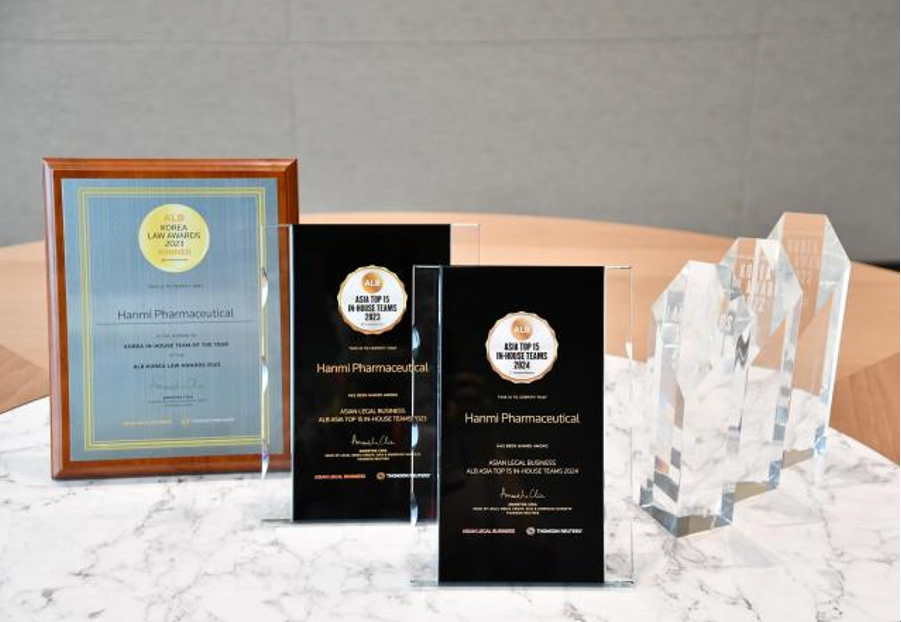
Hanmi Group has pursued various internal and external activities for the responsible implementation of the Nagoya Protocol. The company operates continuous education and publicity programs, such as online training for employees to raise awareness and ensure legal compliance, and internal screensaver operations, making Nagoya Protocol-related information more accessible. Notably, starting from March 2025, the existing training, which was conducted irregularly focusing on relevant departments, will be transitioned to a company-wide accessible, always-on online training system, creating an environment where any employee can learn immediately, thereby further strengthening the internal awareness foundation. Furthermore, Hanmi Group actively participates in collaborations with domestic pharmaceutical and bio-companies. In September 2025, ahead of the Conference of the Parties to the Convention on Biological Diversity scheduled for 2026, the company attended a meeting with the Ministry of Environment regarding the sharing of benefits arising from the commercial use of Digital Sequence Information (DSI), and proactively carried out activities to reflect industry opinions in policy, such as discussing joint response measures with the “Korea Pharmaceutical and Bio-Pharma Manufacturers Association (KPBMA)”. This demonstrates that the company is not merely equipped with an internal compliance system but actively plays a leading role in establishing industry-wide norms and driving institutional development. Hanmi Group will continue to strengthen its internal capabilities for Nagoya Protocol compliance and further elevate the level of global norm adherence related to the utilization of biological genetic resources through cooperation with internal and external stakeholders.
Environmental Protection Activities
BEE Happy project
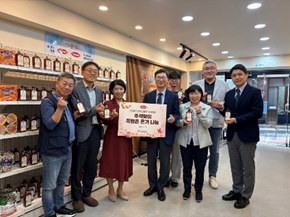
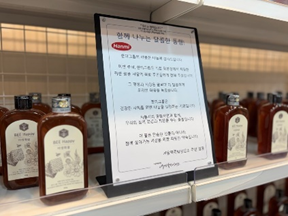
The decline in bee populations due to climate change has emerged as a serious social issue that could lead to ecosystem collapse. In response, Hanmi Group operates a program for bees, which are a crucial link in restoring natural ecosystems and conserving biodiversity. The BEE Happy project operates a beekeeping site creation project to increase bee populations, and to ensure smooth progress, it signed a business agreement with the Korea Beekeeping Association in 2022 and operates 10 bee colonies at its corporate beekeeping site. In 2025, high-quality wildflower honey was produced through the beekeeping site creation project. This honey underwent quality inspection according to honey standard criteria through the Beekeeping Products Research Institute, and 1,080 bottles were donated to 'Ongi Changgo' (Warmth Warehouse) branches 1 and 2, non-profit stores for residents of small, subdivided rooms.
The pollination value of bees in response to climate change is equivalent to 47.4 times* the honey production value, as the beekeeping industry provides public interest values such as ecosystem conservation and pollination of other crops, beyond its economic value. The honey produced through the BEE Happy project has an economic value of 8 million KRW, but when converted to public interest value for society and the environment, it is a program that generates an impact of over 380 million KRW.
Qualitative Effects | ㆍBee ecosystem recovery | Honey production value: 8 million KRW |
|---|---|---|
Social Value | ㆍProvision of public interest values such as ecosystem conservation and pollination of other crops | Pollination (47.4 times* honey production value) Economic value |
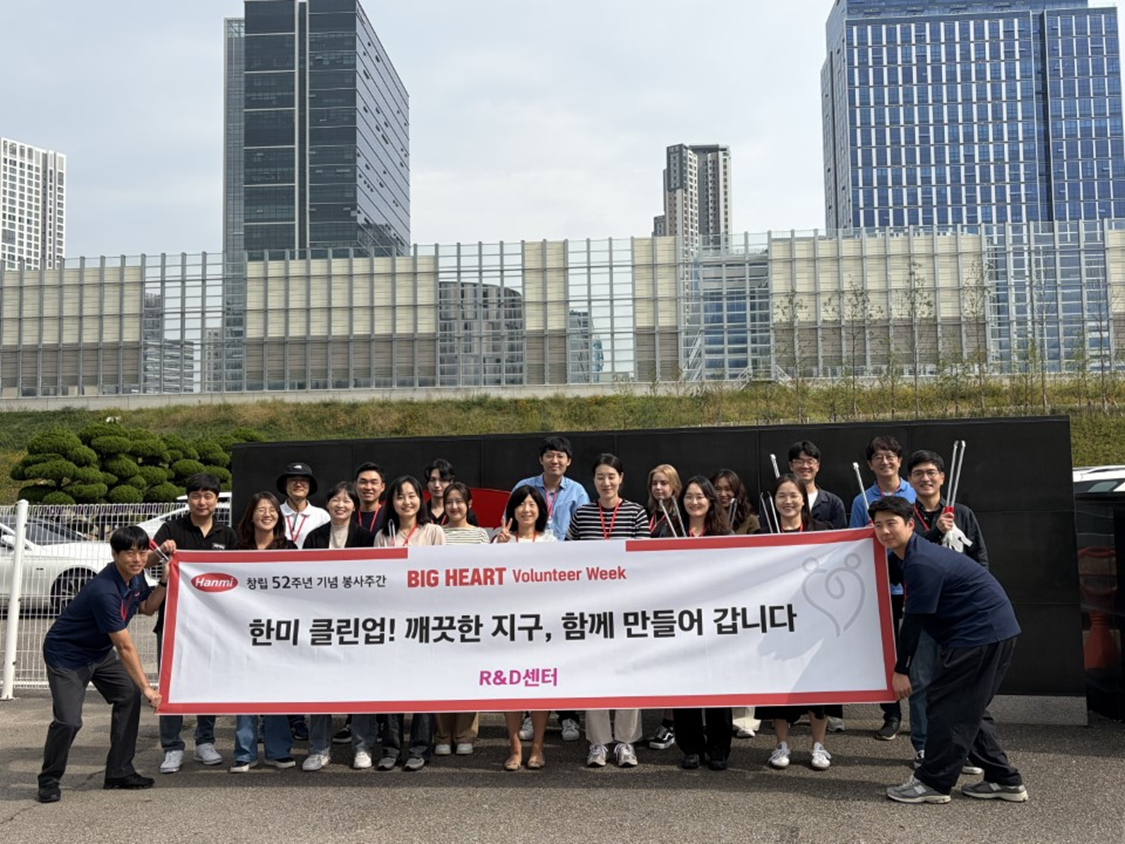
Environmental Cleanup Activities
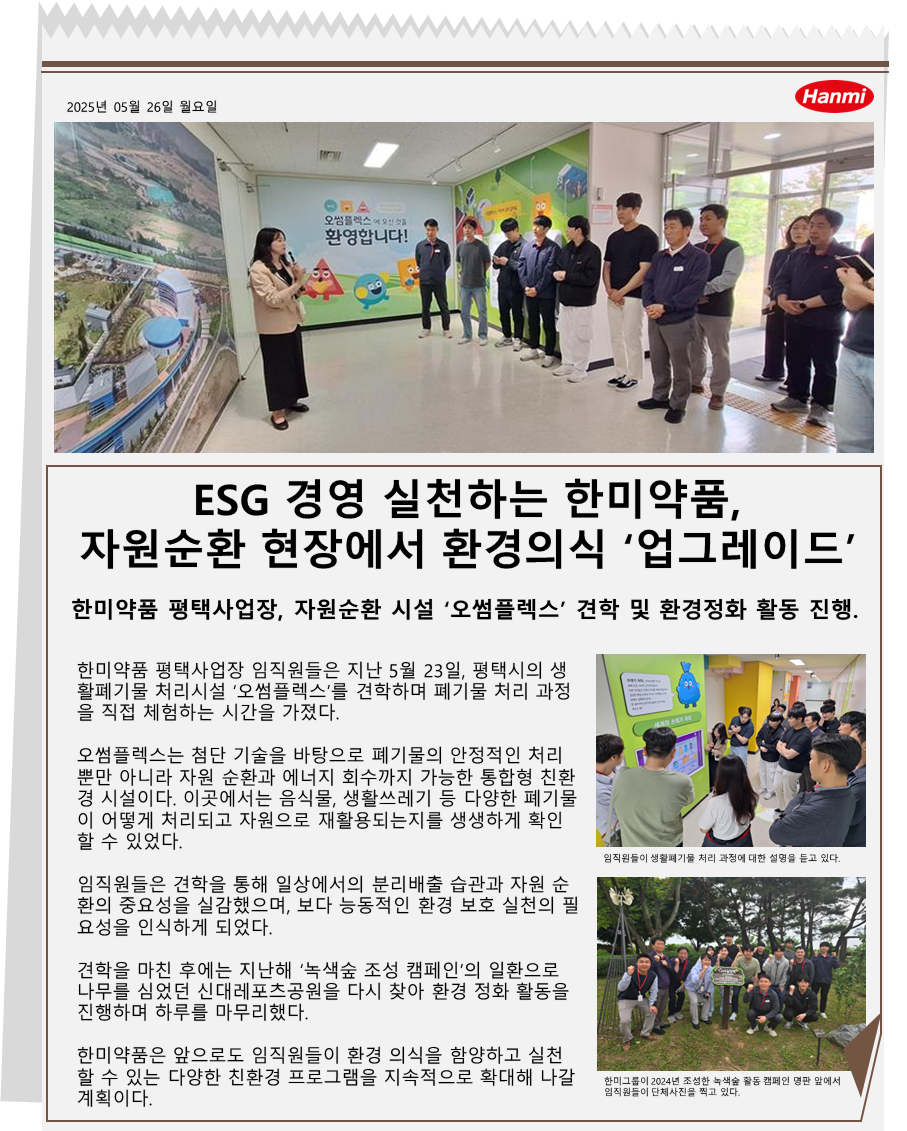
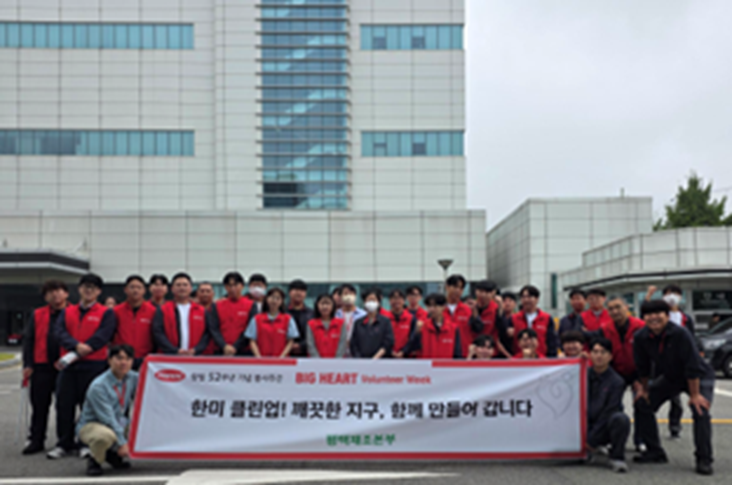
Hanmi Pharmaceutical's Pyeongtaek Bio Plant carried out community contribution activities through cleanup efforts at the Chupal Industrial Complex, where it is located. In 2025, cleanup activities, including waste collection around the industrial complex, business sites, and parks, were conducted 6 times, and environmental awareness was enhanced through a field trip to a waste treatment facility in Pyeongtaek City. Additionally, the R&D Center as part of its Hanmi Clean-up activities, conducts environmental cleanup activities targeting streets, walking paths, and parks around its business sites, contributing to local environmental conservation. It plans to continue operating environmental improvement and volunteer activities. Hanmi Fine Chemical participated in 'Beautiful Industrial Complex Beautification' and 'Prumi Action Team' activities to improve the environment within the Sihwa National Industrial Complex, conducting environmental cleanup activities in the surrounding buffer green spaces and the Okgucheon area. Hanmi Pharmaceutical and Hanmi Fine Chemical will continue to implement ongoing environmental improvement activities.
 |  |  |
|---|---|---|
 |  | |
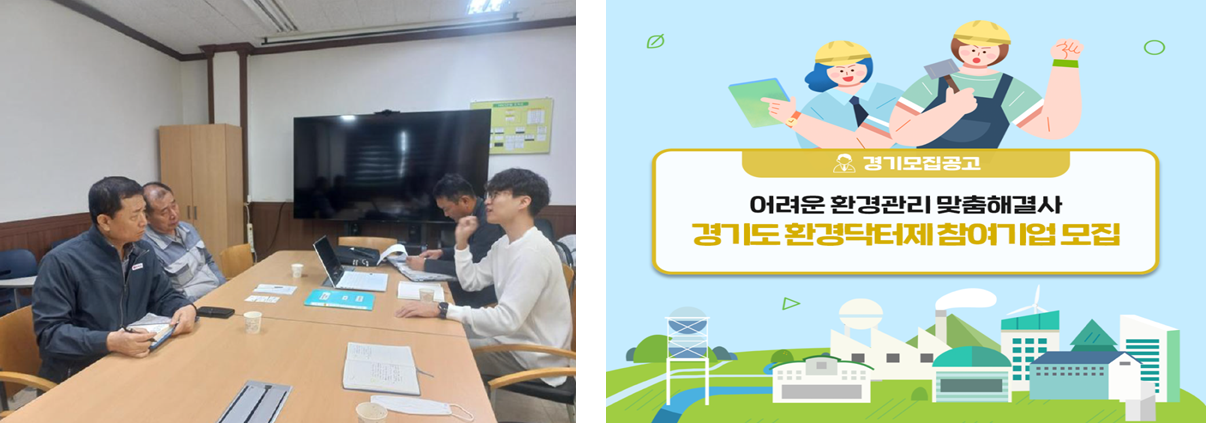
Gyeonggi Province Environmental Doctor System
This is Gyeonggi Province's flagship environmental support program, offering free expert environmental management consulting. Experts directly visit mainly businesses emitting environmental pollutants, as well as small, vulnerable, or new businesses with weak environmental management, to diagnose problems and propose solutions. In 2025, Hanmi Pharmaceutical's Pyeongtaek Bio Plant Manufacturing Headquarters was launched as an advisory group to support customized environmental technology diagnostics for small and medium-sized enterprises in collaboration with the Gyeonggi Provincial Wide-Area Environmental Management Office, and plans to continue its advisory activities in 2026.
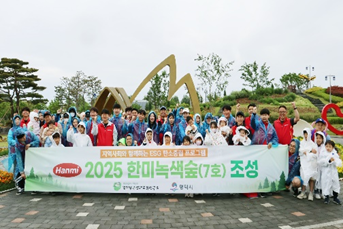
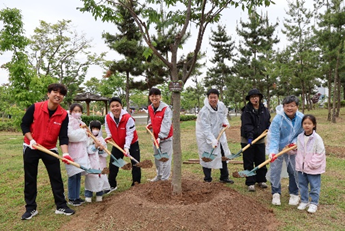
Hanmi Green Forest Creation
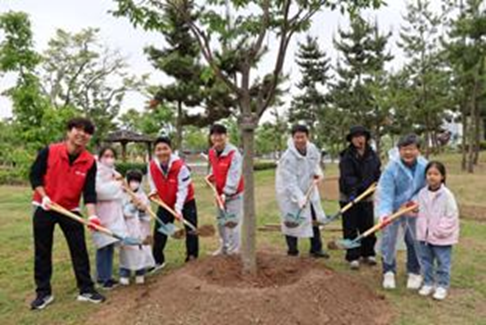
Hanmi Pharmaceutical has consistently pursued the 'Hanmi Green Forest' creation project since 2022 as a long-term initiative for carbon neutrality and biodiversity conservation. The first forest, established starting from Tongbokcheon Stream in Pyeongtaek City, has since expanded to nearby areas, with a total of 8 forests created to date, promoted through cooperation with Pyeongtaek City and the Gyeonggi Southern Ecological Education Research Institute. In 2025, as part of these activities, planting was carried out twice at the Pyeongtaek City Agricultural Eco Park and Hambaksan Park. This year, an additional 112 trees and 800 rare plants were planted, strengthening the foundation for local ecosystem restoration. These planting activities are expected to absorb approximately 912 kg of carbon dioxide annually, making a substantial contribution to urban environmental improvement and climate crisis response.
Area of Activity in 2025 | 1,401 m2 |
Number of Plantings in 2025 | 912 trees |
Cumulative Planted (Number of Trees) | 3,342 trees |
|---|---|
Cumulative CO2 Reduction Contribution | 3,162kg |
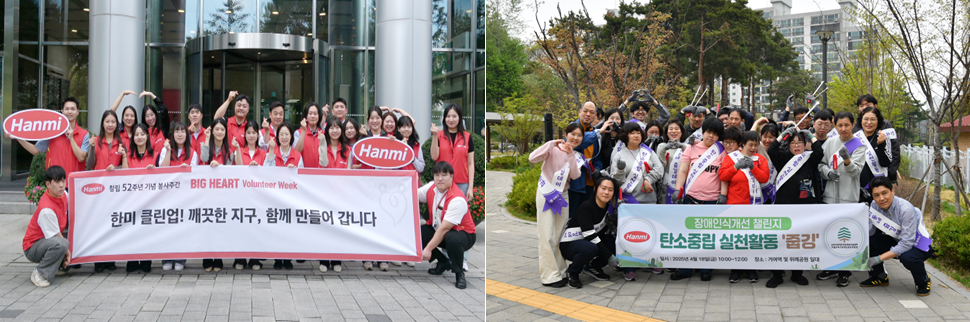
Community Plogging Activities
To commemorate its 52nd anniversary, Hanmi Pharmaceutical conducted plogging activities to improve local environments at 6 business sites nationwide through ‘BIG HEART Volunteer Week’. Employees participated in enhancing the environmental quality of their living areas by collecting trash from nearby streets and sidewalks and separating recyclables during lunch breaks and according to site-specific schedules. This activity has become an everyday eco-friendly practice with employees voluntarily participating in environmental cleanups. Additionally, in April, on Persons with Disabilities Day, a community plogging activity, ‘Jubging’, was launched with workers with disabilities from the Songpa-gu Protected Workshop for Persons with Disabilities. Before the activity, employees from the Songpa-gu Protected Workshop for Persons with Disabilities interacted with workers with disabilities and helped with preparations, and then walked through the streets in teams, collecting trash. This activity saw employees and the local community participate together, fostering local environmental improvement and embodying the values of consideration and cooperation.
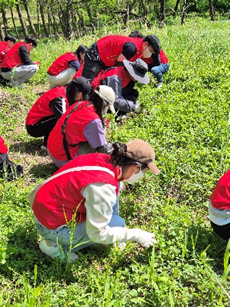
Removal of Ecosystem-Disturbing Plants
Hanmi Pharmaceutical annually operates a program for removing invasive alien species as an environmental activity aimed at biodiversity conservation and creating a healthy ecological environment. Starting in 2024, in collaboration with organizations such as the Songpa-gu Volunteer Center and the Seoul Metropolitan Government's Future Han River Headquarters, it has developed into a citizen-participatory environmental program where employees, their families, and colleagues receive professional training and participate. Following the training, participants actively engage in removing invasive species like 'Gashibak' (Sicyos angulatus) and 'Hwan-sam-deong-gul' (Humulus japonicus) and conducting plogging activities on-site. These activities help members understand the necessity of ecological conservation firsthand and integrate environmental protection practices into their daily lives.
In 2025, a total of 3 activities were conducted in the vicinity of Amsa Ecological Park within Gwangnaru Hangang Park. This area is a well-preserved natural section, and through the removal of invasive species and environmental clean-up activities, it has contributed to restoring the growth foundation for native plants and maintaining ecological health. The participation of employees, their families, and colleagues in improving the ecological environment has further strengthened the environmental awareness and practical capabilities of the members.
- Activity Area: 2981.3㎡
- Activity Zone: Amsa Ecological Park within Gwangnaru Hangang Park
Safe LMO Research Laboratory Management
Hanmi Pharmaceutical conducts safe research and experiments, considering their potential impact on nature, such as antibiotic resistance and ecological disruption, in accordance with the ‘Act on the Transboundary Movement of Living Modified Organisms’ for the management of safe LMO (Living Modified Organism) research laboratories. The company actively develops and implements its own safety measures for accident prevention through systematic safety education, an in-house online system-based biosafety management process, and constant self-inspection. To improve the medical waste separation and collection rate in LMO research facilities, Hanmi Pharmaceutical implemented separation education for researchers in LMO facilities, posted posters, and conducted regular inspections of medical waste disposal. Hanmi Pharmaceutical will continue to strive to create a safe research environment.