

Lim Sung Ki Foundation
The Lim Sung Ki Foundation contributes to the development of
biotechnology and medical science to improve
the quality of life for the public.
The Lim Sung Ki Foundation is a public interest corporation established to carry on the management philosophy of the late Chairman Lim Sung Ki, who left a significant mark on the Korean pharmaceutical and bio-industry with his spirit of 'Creation, Innovation, and Challenge.' The Foundation aims to foster advancements in medical science and biotechnology, ultimately contributing to the improvement of human health.
Mission | Enhancing the quality of life for the public through contributions to the advancement of biotechnology and medical science. |
Vision | Contributing to the realization of a healthy and prosperous society through research support in innovative new drug areas, including those for intractable diseases. |
Main Business | •Award program for excellent researchers in biotechnology and medical science |
Lim Sung Ki Researcher Award
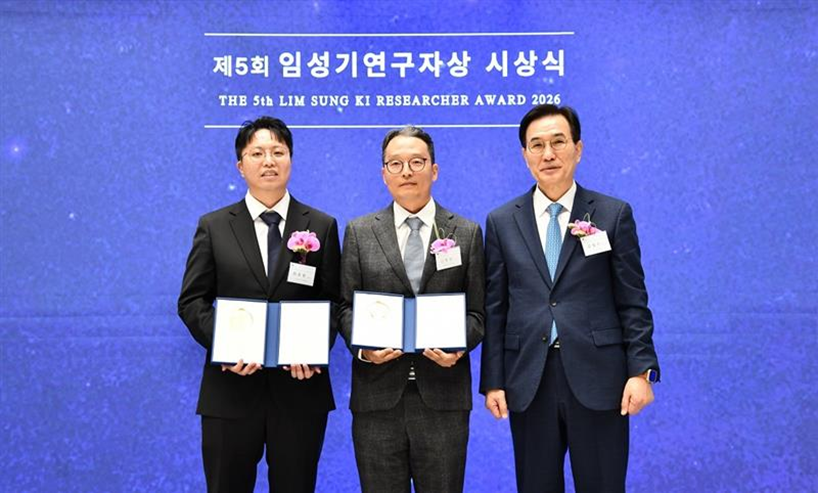
Established in 2021, the foundation initiated its first project by establishing the 'Lim Sung Ki Researcher Award,' which recognizes and awards researchers who have contributed to new drug development through innovative research achievements in medical science and biotechnology. This award has now established itself as the most prestigious award in the field of new drug research and development. Following the call for nominations and recommendations for the 5th Lim Sung Ki Researcher Award in 2025∙and deliberation, Prof. Kim Hyongbum (Yonsei University College of Medicine) was selected as the Grand Research Award recipient, and Prof. Han Yong-Hyun (Kangwon National University College of Pharmacy) was selected as the Young Researcher Award recipient.
Lim Sung Ki Researcher Award Past Recipients
Round | Category | Name | Affiliation | Research Achievement |
5th | Grand Prize | Prof. Kim Hyongbum | Yonsei University College of Medicine | Succeeded in the comprehensive functional analysis of over 27,000 base variations in the ATM gene, a causative gene for hereditary cancer, thereby contributing to the realization of precision medicine and the acceleration of new drug development. |
Young | Prof. Han Yong-Hyun | Kangwon National University College of Pharmacy | Elucidated the mechanism of fatty liver inflammation exacerbation. Developed an innovative new drug candidate targeting 'IL-18'. | |
4th | Grand Prize | Prof. Choi Hyung Jin | Seoul National University Department of Brain and Cognitive Sciences | Elucidated the brain-mediated appetite suppression mechanism of the world's first GLP-1 obesity treatment. |
Young | Prof. Im Se Jin | Sungkyunkwan University | Discovering a new CD8 T cell subset and developing immunotherapeutic strategies for graft-versus-host disease | |
Prof. Lee Wonhwa | Department of Chemistry, | Elucidating a new pathological role of the TOX protein expressed upon infection with SARS-CoV-2, the COVID-19-causing virus | ||
3rd | Grand Prize | Prof. Kim V. Narry | Department of Biological Sciences, | Discovery of an RNA sequence that increases viral RNA stability and protein production |
Young | Prof. Bae Sangsu | Seoul National University | Development of the world's first ex vivo gene-editing cell therapy for tyrosinemia, a hereditary liver disease | |
Prof. Lee Joo Myung | Division of Cardiology, | Presenting an indicator to screen high-risk groups for acute rejection in heart transplant patients | ||
2nd | Grand Prize | Dr. Yu Kweon | Korea Research Institute of | Identifying that INSL3 secreted by cancer cells is a factor causing eating disorders, and presenting its potential for development as an adjunct to cancer therapy |
Young | Prof. Kang jeehoon | Division of Cardiology, | Clinical study comparing prasugrel stepped-down therapy with standard therapy. It revealed a 52% reduction in bleeding-related events, proving it to be a safe regimen. | |
Prof. Kim Hye Young | Department of Medicine, Seoul National University College of Medicine | First to identify immune kinetics in chronic kidney disease and characterize SiglecF-expressing neutrophils. Presented potential for new drug development in renal fibrosis diseases. | ||
1st | Grand Prize | Dr. Kim In-San | Korea Institute of | Development of new anti-cancer immune nanoparticles that activate human immune cells to specifically attack cancer cells. |
Young | Prof. Lee Hyukjin | Ewha Womans University | Development of lipid nanoparticles to aid in the in-vivo delivery of the nation's first RNA therapeutics and mRNA vaccines. | |
Prof. Ju Young Seok | KAIST Graduate School of | Elucidation of COVID-19 infection mechanisms using human 3D alveolar culture technology and establishment of a platform applicable for screening therapeutic candidates. |
Research Support for Rare and Intractable Diseases
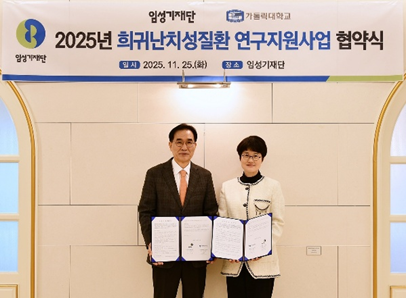
The Lim Sung Ki Foundation selects and supports outstanding research projects in the field of rare and intractable diseases, with an annual budget of 400 million KRW. In 2025, through a call for research proposals on neurological rare and intractable diseases, Prof. Cho Mi-La of Catholic University College of Medicine was selected for her systemic sclerosis research project. With support from the Lim Sung Ki Foundation, Prof. Cho Mi-La plans to investigate the mitochondrial dysfunction caused by Reverse Electron Transport (RET) and the main action mechanism of CD38 protein in T/B cells and fibroblasts, which are target cells causing pathogenesis in systemic sclerosis, and to research methods to regulate inflammatory and fibrotic active responses by normalizing mitochondrial function.
In 2026, the foundation plans to issue an additional call for basic and clinical research projects on musculoskeletal and connective tissue rare diseases, and it will offer various forms of support, from basic research to stable and sustainable funding, to enable the achievement of innovative results in rare and intractable disease research projects.
Rare and Intractable Disease Research Support Projects
Year | Project Title | Researcher | Affiliation | Research Period |
2025 | Mitochondria of immune cells and fibroblasts accompanying CD38 overexpression in systemic sclerosis elucidation of pathology and development of combination therapies regulating mitochondria | Prof. | Catholic University of | 2025.12~2028.11 |
2022 | Lower Limb Spinal Muscular Atrophy (SMA-LED) through Control of Dynein-BICD2 Binding Research on Establishing Treatment Strategies | Prof. | Seoul National University | 2022.12~2026.02 |
Development of induced pluripotent stem cell-based human disease models for pediatric chromosomal rare diseases and Identification of novel mechanisms through 3D chromosomal structure profiling | Prof. | Sungkyunkwan University | 2022.12~2025.11 |